Every tequila on the shelf carries one of a handful of age words, and each one is a legal class with a minimum time in wood. Once you know the minimums, the price ladder makes sense.
The four aged classes
- Blanco (or plata). Unaged, or rested less than two months. This is agave with nothing in front of it: pepper, citrus, cooked agave, sometimes a green, vegetal edge.
- Reposado. "Rested" for at least two months in oak, and less than a year. The oak softens the pepper and adds a little vanilla without hiding the plant.
- Añejo. At least one year in oak containers no larger than 600 liters. The small barrels matter: more wood contact per liter means more caramel, baking spice and tannin.
- Extra añejo. At least three years under the same container rule. The class was only added in 2006.
Most tequila barrels are used American whiskey barrels, which is why a long-aged añejo can drift toward bourbon. Some people love that; others wanted agave and got oak.
The labels that are not age classes
Joven, or gold, is the confusing one. It can be a blend of blanco with older tequila, but the cheap gold bottle in most stores is a mixto, as little as 51% agave, colored with caramel. The color tells you nothing about age.
Cristalino is aged tequila, usually añejo, filtered after aging to strip out the color. It is not a legal class of its own. Filtering removes some of the oak along with the color, so cristalinos taste softer and sweeter than the añejo they started as. Don Julio 70 is the best-known example.
The fine print about additives
Tequila rules allow small amounts of caramel color, oak extract, glycerin and sugar syrup, up to 1% of total weight, without listing them on the label. That can make young tequila seem older than it is. Producers who skip them usually say so.
Mezcal uses blanco, reposado and añejo too, plus "madurado en vidrio," rested in glass. Most great mezcal is sold unaged. Our tequila vs. mezcal primer explains where mezcal gets its smoke.
Which one to buy
For margaritas, a 100% agave blanco. For sipping on a budget, a reposado is the best all-rounder: enough oak to round it off, not enough to bury it. Buy añejo when you know you like oak, and treat extra añejo as a gift bottle, not a benchmark.
Taste the ladder
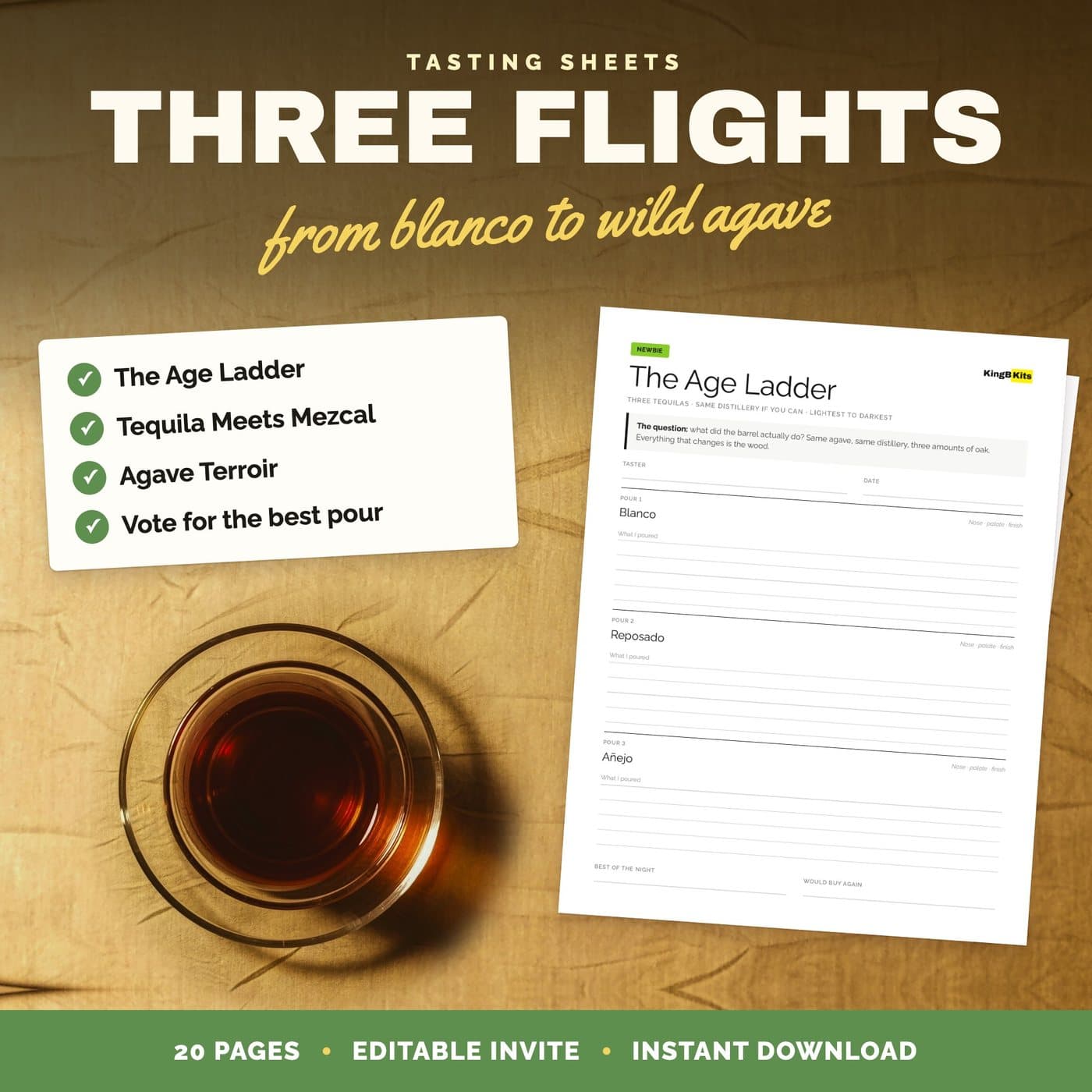
The clearest lesson is a blanco, reposado and añejo from the same distillery, poured lightest to darkest, an ounce each. Same agave, same still, so the only thing that changes is the wood. That is the Age Ladder flight in our Tequila & Mezcal kit, with a tasting sheet for each pour and bottles named at three budgets. For how to actually sip them, see How to Sip Tequila and Mezcal.