
All tequila is technically a mezcal. Almost no mezcal is tequila. That one-directional relationship confuses more people than any other fact about agave spirits, so it's worth untangling first.
The core difference
Tequila is made exclusively from blue Weber agave, almost entirely in Jalisco, and is typically steamed in above-ground ovens. Mezcal can be made from more than thirty agave species, centered on Oaxaca, and the agave is roasted in an underground pit over hot rocks and hardwood. That pit is the entire source of mezcal's smoke. Nothing is added, it's a byproduct of the cooking method, not a flavoring.
The age ladder
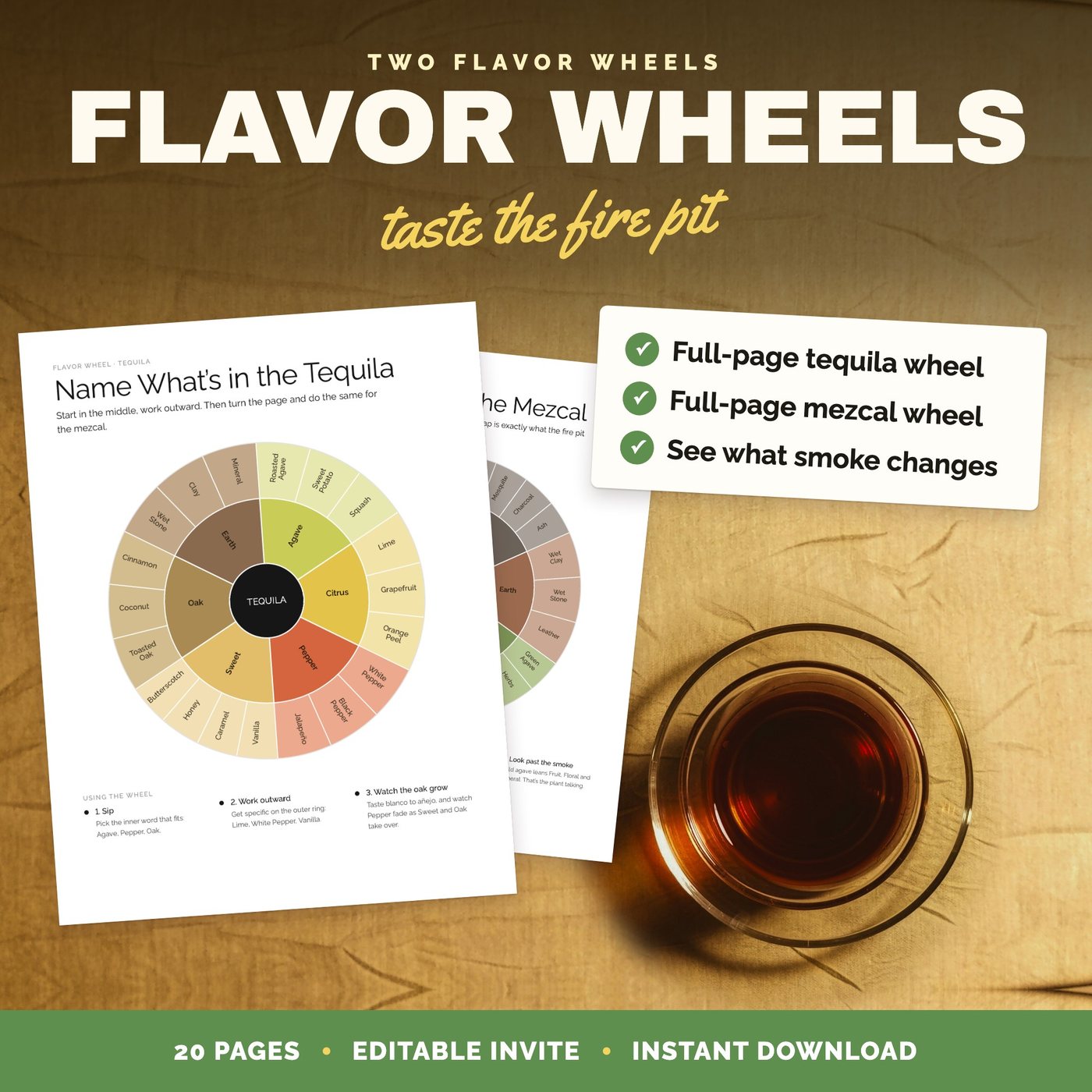
Both spirits use the same aging vocabulary. Blanco / Plata is unaged, or aged under two months: the clearest read on the agave itself, with pepper, lime, and cooked vegetable notes. Reposado is "rested" for two to twelve months. Oak rounds off the pepper and brings in vanilla and caramel. Older expressions keep layering on oak character the longer they sit.
Reading a label
The single most useful label rule: look for 100% agave (tequila) or a NOM and production method disclosure (mezcal). Anything labeled simply "tequila" without the 100% agave claim is a mixto: as little as 51% agave, cut with other sugars, and it's the reason the lime and salt ritual exists in the first place. Good 100% agave spirits don't need the crutch.
Building a tasting flight
A simple three-pour flight works for any group: a blanco to taste the raw agave, a reposado to see what oak adds, and, if you want to introduce the smoke question, a mezcal alongside either one to compare. The two spirits share enough vocabulary (agave, pepper, citrus) that tasting them side by side is more instructive than tasting either alone.
Our Tequila & Mezcal kit turns this into a full pairing chart across three budget tiers, with separate tequila and mezcal flavor wheels and three guided tasting flights.