Yes, often. Adding water to whisky isn't something only amateurs do. Blenders cut samples down with water before they nose them, and plenty of distilleries suggest a splash in their own tasting notes. Neat is a fine starting point. It is not the only correct way to drink it.
What water actually does
Alcohol at high strength numbs the nose and tongue. Above roughly 50% ABV, the first thing most people notice is heat, and the flavor behind it gets lost. Water lowers the strength, which takes the edge off the burn and lets you pick up what was hiding underneath.
It also changes which aromas reach your nose. A 2017 computer-simulation study from Linnaeus University in Sweden found that guaiacol, a smoky compound common in peated Scotch, is more likely to sit at the surface of the liquid, where it can escape toward your nose, once the whisky is diluted below cask strength. That's a model, not a verdict, but it lines up with what most tasters report: a diluted pour often smells more open, not just weaker.
When to add it
- Cask strength, always try it. Anything bottled above about 50% is a strong candidate. These whiskies are sold undiluted precisely so you can choose your own strength.
- Around 46%, maybe. Try it neat first, then add a few drops and compare.
- At 40%, usually not. The whisky has already been diluted to bottling strength. More water tends to thin the texture before it reveals anything new.
How to add it
Use room-temperature still water. Not chilled water, and not ice. Cold mutes aroma, which is the opposite of what you want here.
Add it a few drops at a time. A straw works as a dropper: dip it in a glass of water, cover the top with a finger, and release over the whisky. Swirl, wait half a minute, and nose it again. You can always add more. You can't take any out.
Taste every pour twice: once neat, once with water. The difference between the two sips is often more interesting than either sip alone.
At a tasting
Put a small jug of water and a few straws on the table so guests can adjust their own glass. If you're tasting several whiskies, run them from lowest strength to highest, and use the right glass: a narrow one concentrates ethanol along with aroma, which makes water more useful, not less.
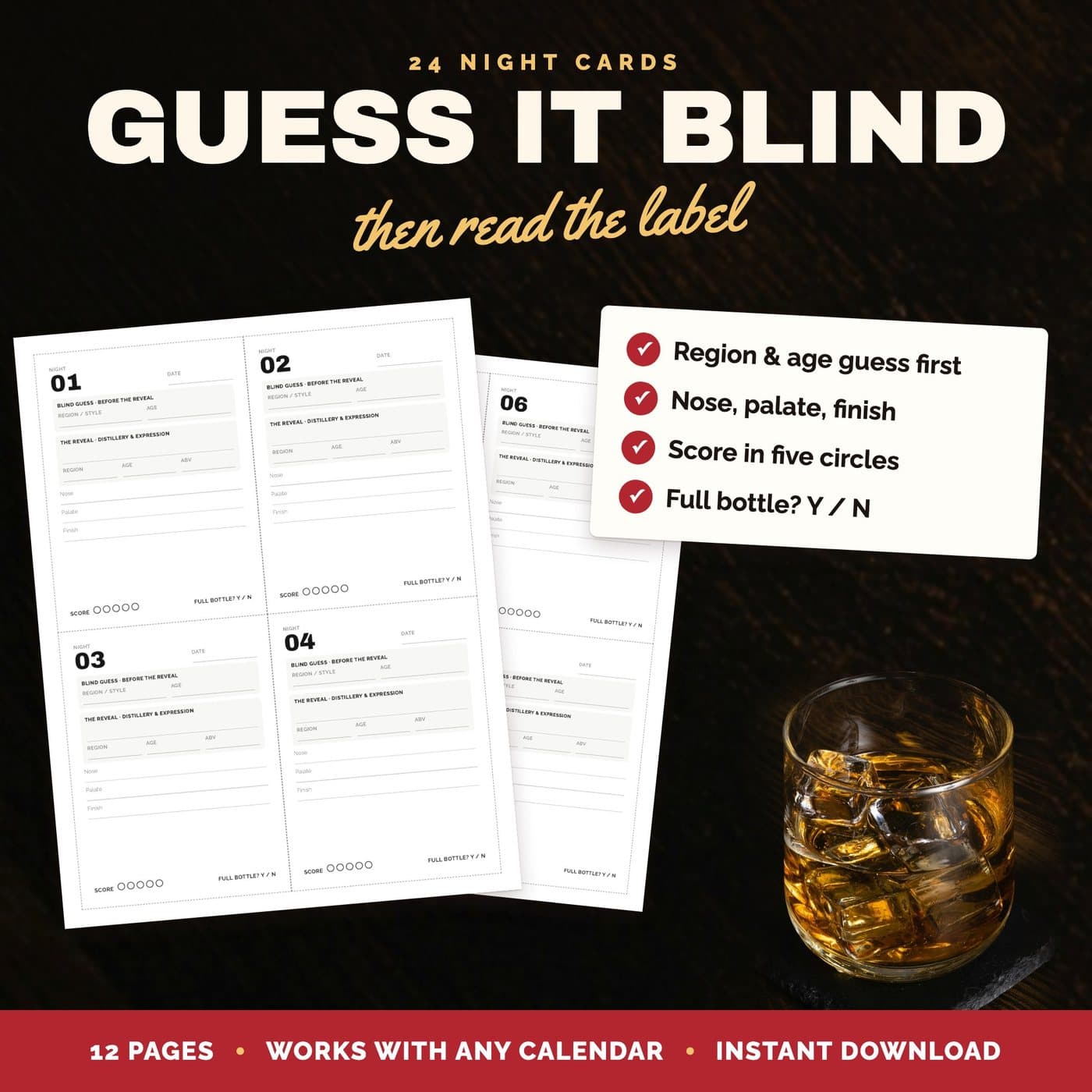
This matters most with advent calendar drams, where you won't know the strength until the reveal. Our 24 Nights of Whisky cards include an ABV line for exactly that reason. Taste neat, make your blind guess, then try a few drops before you check the label. A pour that burns neat and opens up with a few drops is a decent hint that it was bottled above standard strength.