Roast level is the first thing most people pick a bag by, and the thing they most often get wrong. The common belief is that darker means stronger. It doesn't, in caffeine or in any other way that matters.
What roasting does
Green coffee beans taste grassy and raw. Roasting browns the sugars and builds the flavors we think of as coffee. Partway through, the beans make a popping sound called first crack, and most light roasts come out of the roaster around then. Keep going and a second, quieter crack follows. Beans pulled after that are dark roasts, and you can usually see oil on their surface.
The longer the roast, the more the flavor comes from the roasting and the less from the bean. A light roast keeps the character of where it grew: fruit, flowers, bright acidity. A dark roast trades that for bitterness, smoke and toasty, bittersweet notes. Two dark roasts from different countries taste much more alike than the same two coffees roasted light. That isn't a flaw, just a different thing to like.
The caffeine answer
Roasting barely touches caffeine. What changes is the bean: it loses water and weight as it roasts and puffs up in size. So the answer depends on how you measure.
- By the scoop, a light roast has slightly more caffeine, because its denser beans pack more coffee into the same spoon.
- By weight, a dark roast has slightly more, because each gram is less water.
Either way the gap is small. Two things matter far more: how much coffee you use per cup, and the species. Robusta has roughly twice the caffeine of arabica, and most specialty coffee is arabica.
Roast words on the bag
There is no industry standard for roast names. One roaster's "medium" is another's "dark," and "French roast," "Italian roast" and "Vienna roast" mean whatever that company decided. "Bold" is a marketing word, not a measurement. "Espresso roast" is a suggestion: espresso is a brewing method, and you can pull a shot from any roast.
The words worth reading are the origin, the processing method if listed, and the roast date. Coffee tastes best within a few weeks of roasting, and a bag with only a best-by date is hiding the one number you want.
Taste it instead of arguing
The fastest way to settle this at home is to brew two coffees side by side, same dose, same water, same grind. Better still, buy one origin roasted two ways, since that isolates roast from everything else. Most people find they have a clear preference, and it isn't always the one they'd have guessed.
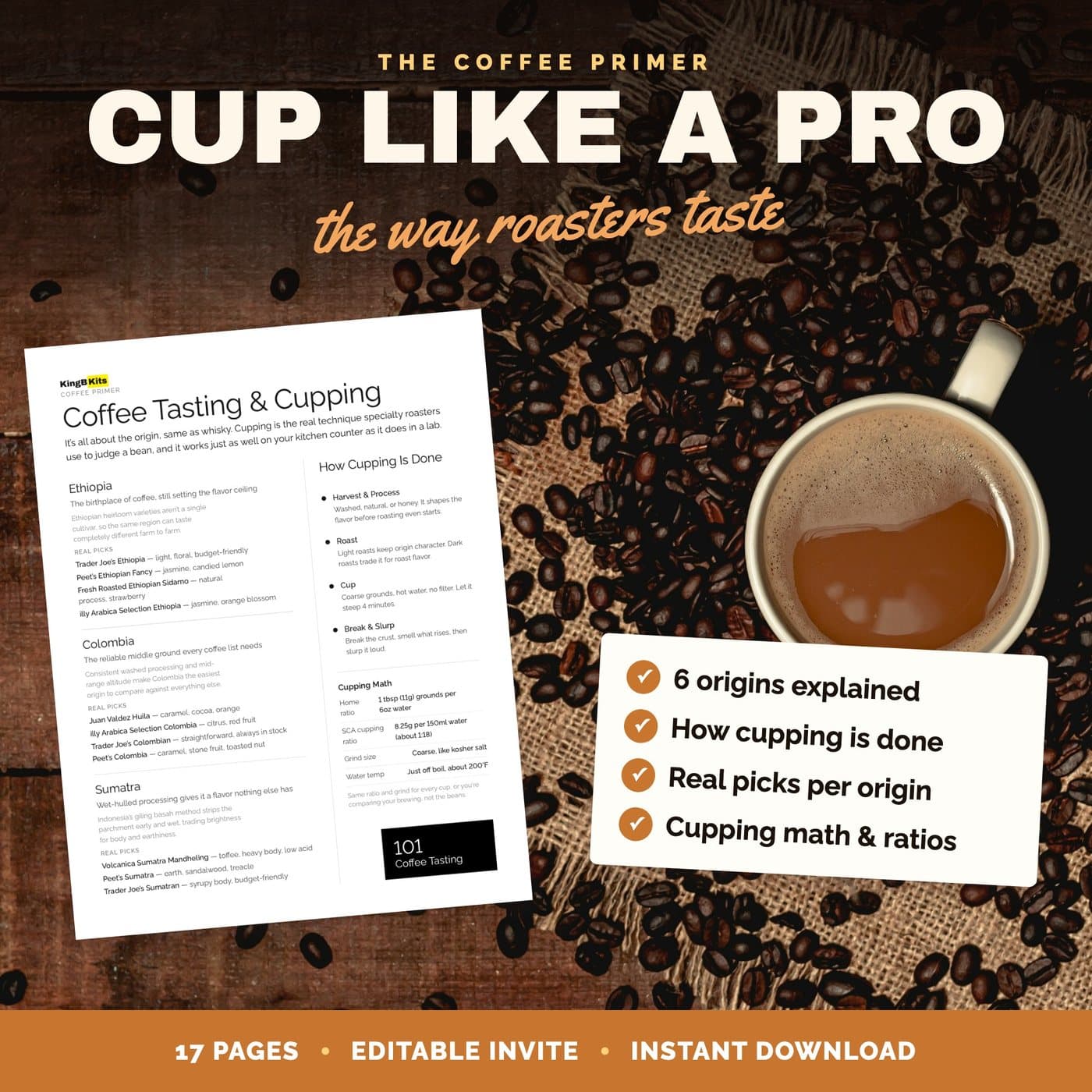
That side-by-side is the whole idea behind a cupping. Our Coffee Tasting kit covers roast levels in its primer and lists 32 real coffees to buy, and How to Host a Coffee Cupping walks through running one.