A mash bill is the grain recipe a whiskey is distilled from. American whiskey labels lean on it more than anything else, and it's the quickest way to guess what a bottle will taste like before you open it.
What the rules actually require
Under US federal rules, bourbon has to be made from at least 51% corn and aged in new, charred oak containers. American rye whiskey follows the same structure with rye as the 51% grain. Bourbon also has to be made in the US, though not necessarily in Kentucky.
The rest of the recipe is up to the distiller. Most bourbons are mostly corn, plus a smaller share of a "flavoring grain" and a little malted barley, which supplies the enzymes that turn starch into fermentable sugar. That flavoring grain is the whole story here.
What each grain pushes
Corn is the sweet, round base. It's why bourbon reads as fuller and softer than Scotch.
Rye brings spice: black pepper, clove, a drier, slightly herbal edge. A "high-rye" bourbon uses more of it as the flavoring grain. A rye whiskey makes it the main grain, and the spice goes from accent to headline.
Wheat swapped in for rye gives you a wheated bourbon. It reads softer and breadier, with less bite on the finish. Maker's Mark and Larceny are the easy-to-find examples.
One honest caveat: a lot of what people call bourbon flavor, the vanilla and caramel, comes from the new charred barrel, not the grain. The mash bill shapes the spice and texture; the oak does much of the sweet work. Proof and age move things too, so treat the grain as a strong hint, not a guarantee.
Reading a label
Most bottles don't print the mash bill. On an American bottle, "rye whiskey" or "straight rye" on the label tells you rye is the majority grain. "Wheated" usually appears only in marketing copy or on the distillery's own site. If it matters to you, look the bottle up before you buy. Plenty of producers publish their recipes.
Matching them to candy
This is where the difference stops being trivia. Our Candy & Whisky kit uses all three on purpose:
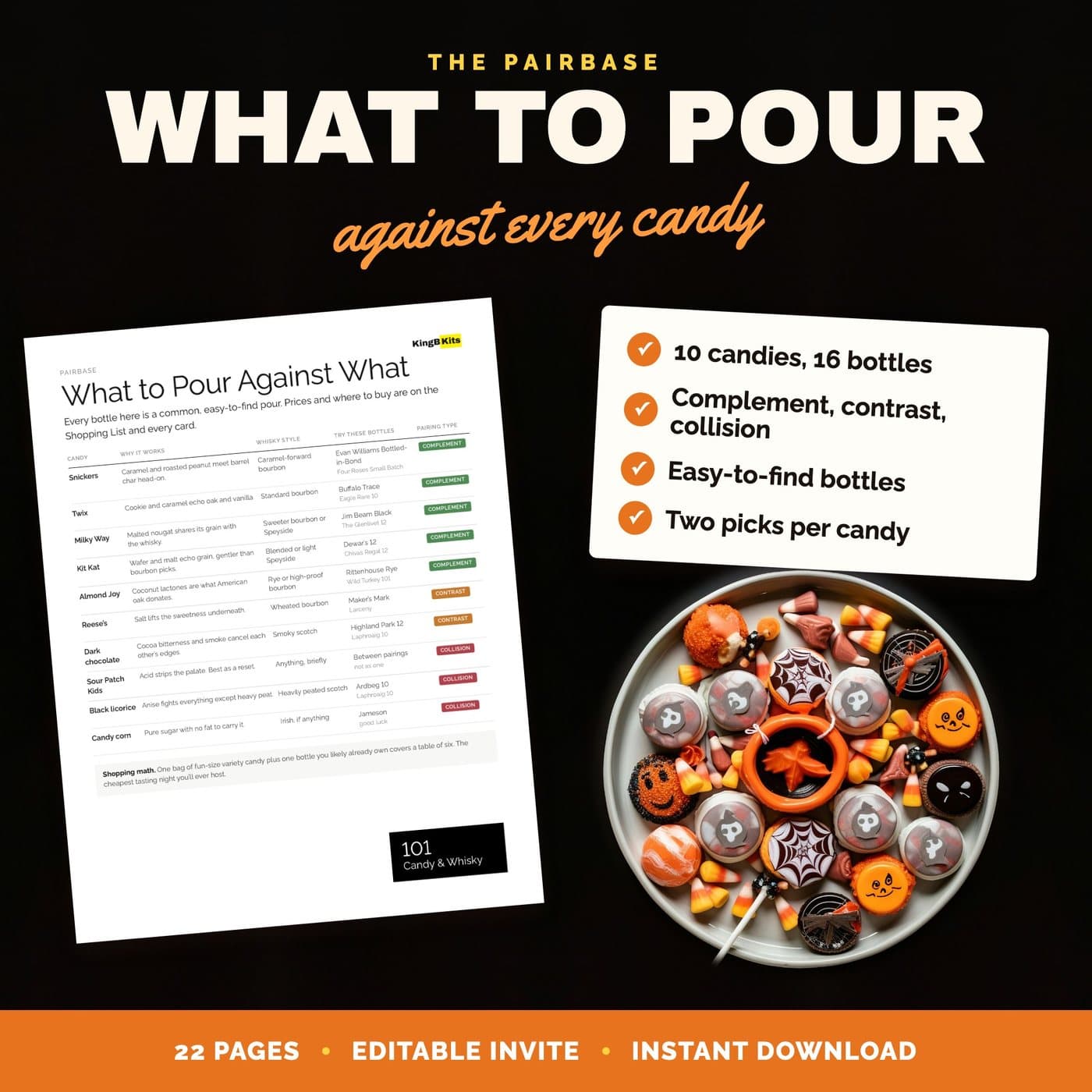
- Caramel-forward bourbon with Snickers, Twix, or Milky Way. Caramel against caramel. Nothing fights, which makes it the baseline.
- Wheated bourbon with Reese's. The salt and roasted peanut want a pour that won't add more bite. A softer wheater lets them lead.
- Rye with Almond Joy. Coconut and milk chocolate are heavy and sweet. Rye's pepper cuts through instead of piling on.
Pour them in that order, softest first, so the rye's spice doesn't flatten the gentler pairings. The sip, bite, sip again method covers the rest.
If you only own one bottle, use it. A standard bourbon handles every candy in the Newbie flight. The second and third bottles are what turn a sugar night into an actual comparison.